AHPS Shares Facts on Nov. 3 Sales Tax Referendum
|
|
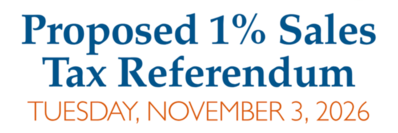
Low Moor, VA (Sept. 28, 2026) - Alleghany Highlands Public Schools is providing information to help residents understand a proposed local sales and use tax referendum that will appear on the Nov. 3, 2026, ballot.
Voters in Alleghany County and the City of Covington will be asked whether to authorize an additional 1 percent local sales and use tax for eligible school construction and major renovation projects.
If approved by voters and implemented, the measure would add 1 percentage point to the current local sales and use tax rate, increasing it from 5.3 percent to 6.3 percent in Alleghany County and Covington.
The referendum is on the ballot following action by the Alleghany County Board of Supervisors and Covington City Council to request that the question be presented to voters. Their action placed the question before voters and does not represent a position for or against the proposed tax.
What is being proposed?
In 2026, the Virginia General Assembly approved budget language expanding the authority of qualifying counties and cities to ask voters to approve an additional local sales and use tax of up to 1 percent for eligible school construction and major renovation projects.
School construction and major renovation projects can involve both state and local funding. Virginia provides funding for school construction through programs such as the School Construction Fund and Literary Fund loans, while localities also may provide funding for school capital projects.
The proposed tax would provide an additional local funding source for eligible school construction and major renovation projects. If approved and implemented, the revenue could be used for those projects and related financing costs, as allowed by state law.
Under a 2020 law, nine Virginia localities previously had the authority to levy an additional sales tax for school construction and renovation projects. Those localities include Henry County, the City of Danville and Pittsylvania County.
This November, voters in 47 Virginia localities will decide whether to approve an additional 1 percent sales tax for school construction and major renovation projects in their communities.
Approval by voters would not automatically put the tax into effect. The local governing bodies would need to take the required steps to implement it.
What would the money be used for?
State law requires revenue from the additional tax to be used for eligible school construction and major renovation projects and certain related financing costs.
Alleghany Highlands Public Schools does not currently have any major new school construction projects planned. However, the school division has identified more than 100 capital needs across its schools and facilities.
A capital need is a repair, replacement, renovation or improvement that typically involves a significant cost and is expected to provide long-term value to a school or facility. Examples include replacing a roof, upgrading major building systems, improving heating and cooling systems, renovating restrooms or making other significant building improvements.
Among AHPS' most pressing identified needs are roof replacements at Clifton Academy and Mountain View Elementary School, along with other facility repairs and improvements.
The school division has not identified a single major construction project encompassing these needs. Instead, it has developed a broad list of capital needs that may require attention over time.
If approved and implemented, revenue from the additional tax could be used for capital projects that meet the eligibility requirements established by state law. It could not be used for regular school operating expenses, such as employee salaries, classroom supplies or day-to-day operations.
How would the additional 1 percent tax work?
The proposed tax would add 1 percentage point to the current local sales and use tax rate.
For example, a taxable purchase currently subject to a 5.3 percent sales and use tax would be subject to a 6.3 percent rate if the referendum is approved and the tax is implemented.
On a $100 purchase, the additional 1 percentage point would add $1 to the cost. A purchase that currently costs $105.30 after the 5.3 percent sales tax would cost $106.30 if the additional tax were implemented.
The additional revenue would be earmarked for eligible school construction and major renovation projects and related financing costs, as allowed by state law.
A sales and use tax applies where a taxable purchase is made, not where the purchaser lives. If Alleghany County and Covington approve and implement the tax, residents who shop in other participating localities could pay that locality's additional 1 percent tax, with revenue supporting eligible school projects there.
Several high schools that Alleghany High School competes against are located in a Virginia locality that is considering the additional 1 percent tax this November. If that locality approves and implements the tax, an Alleghany County or Covington resident who travels there for a high school sporting event and makes a taxable purchase could pay the additional 1 percent tax. That revenue would support eligible school projects in the locality where the purchase was made.
The same works in reverse. If Alleghany County and Covington do not approve and implement the tax, visitors from that locality would not pay the additional 1 percent tax when making taxable purchases in Alleghany County or Covington.
How would the tax differ from a real estate tax?
A real estate tax is assessed on property within the locality and is paid by property owners. In some cases, those costs may be reflected in rents.
A sales and use tax, by comparison, is collected on taxable purchases made within the locality. As a result, the additional tax may be paid by people who do not own property in the locality, including visitors and commuters who make taxable purchases there.
If implemented, the additional tax would apply to eligible taxable purchases made in Alleghany County and Covington. Clifton Forge and Iron Gate, both towns within Alleghany County, would also be subject to the tax. Revenue collected from purchases in those communities would be included in the county's total revenue from the tax.
Anyone making a taxable purchase locally could pay the additional tax, including residents, commuters, visitors and other nonresidents.
The Alleghany Highlands' location along Interstate 64 and attractions such as Douthat State Park, Lake Moomaw and Falling Spring Falls bring visitors and travelers into the area. Visitors making taxable purchases locally could also contribute to revenue generated by the tax.
What purchases would be exempt?
The additional tax would apply only to purchases that are subject to Virginia's sales and use tax.
Purchases that are exempt under state law would remain exempt. These generally include certain groceries and food for home consumption, prescription drugs and other exempt purchases. Gasoline would also be exempt from the tax.
Specific exemptions are determined by Virginia law.
How much revenue could be generated?
Current estimates project approximately $1.55 million annually in additional revenue for eligible school capital projects.
The estimate includes:
• $787,858 from the City of Covington
• $762,096 from Alleghany County
Actual revenue could vary from year to year based on the amount of taxable sales in the county and city.
How is this different from Virginia Lottery funding?
The proposed tax would be a separate local funding source from existing state education funding, including Virginia Lottery proceeds.
Virginia Lottery profits support K-12 public education statewide. After prizes, retailer compensation and operating expenses are paid, the remaining proceeds are transferred to the state and distributed to school divisions through Virginia's education funding system.
These funds help support schools' overall operating and educational needs; they are not dedicated specifically to local school construction or major renovations.
What happens if voters approve the referendum?
If voters approve the referendum, the local governing bodies would consider taking the required steps to implement the additional tax.
If implemented, the local sales and use tax rate would increase from 5.3 percent to 6.3 percent, and revenue from the additional 1 percent would be restricted to eligible school construction and major renovation projects and related financing costs.
The additional revenue would provide a dedicated funding source for eligible capital projects. It could help address some facility needs and potentially reduce pressure on other local funding sources. The extent of any such effect would depend on the revenue generated, eligible project costs and decisions made by local governing bodies and the school division.
AHPS would continue to identify, prioritize and plan for facility needs in accordance with applicable requirements and available funding.
What happens if voters do not approve the referendum?
If voters do not approve the referendum, the additional tax would not be implemented, and the local sales and use tax rate would remain at 5.3 percent.
Alleghany Highlands Public Schools, Alleghany County and the City of Covington would continue to address their respective funding needs, including school operating costs, capital projects and other local priorities.
AHPS and local governments would continue to consider other available funding sources for school capital projects, including local, state or federal funding, as applicable.
When will voters decide?
The referendum will be on the ballot Tuesday, Nov. 3, 2026, for voters in Alleghany County and the City of Covington.
AHPS is providing this information to explain the referendum, how the proposed tax would work and how the revenue could be used. The decision on whether to authorize the additional tax will be made by voters.
AHPS will continue to share factual information about the referendum and its potential impact on school facilities and the community as additional information becomes available. Residents are encouraged to review the referendum language and make their own informed decision on Nov. 3.
| | | | | |
|