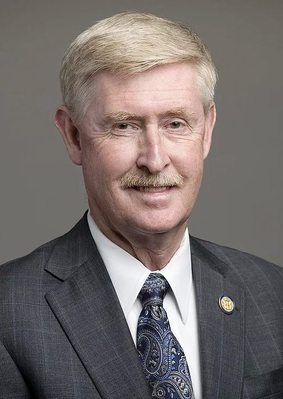
Del. Terry Austin Reports From Richmond - Week 8
|
|
Richmond, VA (March 16, 2026) - To the Constituents of the 37th House District:
The 2026 General Assembly Session concluded on the evening of Saturday, March 14, ending a sixty-day legislative period marked by significant policy debates and decisions affecting Virginia’s future. More than 2,300 bills were introduced between the House of Delegates and the Senate, with 757 bills passing both chambers and now awaiting final action from the Governor.
This year’s session was defined by several major themes: affordability and the rising cost of living, the congressional redistricting constitutional amendment, public safety and the rights of gun owners, and policies affecting Virginia’s job creation and business growth. The Democrat majority also expanded collective bargaining rights for public-sector employees, creating significant fiscal implications for the Commonwealth and local governments.
One of the General Assembly’s most important responsibilities is adopting a constitutionally required balanced state budget. Unfortunately, despite one party controlling both chambers, neither committee chairmen could reach agreement on the broader strokes of a final budget before adjournment. As a result, the General Assembly will need to return to Richmond on April 23 for a special session to complete our work on the $210 billion biennial budget. This delay affects the Commonwealth’s financial planning and creates uncertainty for local governments across Virginia that rely on state funding to finalize their respective budgets for schools, public safety, and other local services.
As one of two House Republican budget conferees, and the Ranking Republican on the House Appropriations Committee, I am working to ensure our region’s priorities are represented throughout the budget process and will continue advocating for policies that promote economic growth and affordability for Virginia families. Virginia’s financial position remains strong, and maintaining our AAA bond rating continues to be one of my top priorities to protect taxpayers and keep borrowing costs low for major infrastructure projects.
However, Republicans opposed several provisions in the House budget due to their long-term fiscal impact, including expanded employer mandates, increased prevailing wage requirements for public construction, energy policies that will raise electricity costs, legislation expanding collective bargaining, and a proposed amendment increasing legislators’ salaries by nearly 300 percent. While collective bargaining is often discussed as a workforce policy issue, it also carries significant financial consequences since negotiated agreements affecting wages, benefits, and workplace policies must ultimately be funded through state and local budgets.
Republicans proposed several budget amendments designed to provide meaningful cost relief for Virginia families, including reducing electricity costs, expanding car tax relief on the first $5,000 of vehicle value, and eliminating the remaining state tax on groceries while ensuring localities remained financially whole. Despite strong revenue growth and a budget surplus, these proposals were rejected by the majority.
Another major issue this session was the proposed congressional redistricting constitutional amendment, which will allow the Democrat majority to redraw Virginia’s congressional districts prior to the 2030 census. Virginia voters approved a bipartisan redistricting process in 2020 with a two-thirds majority, producing our current map with a competitive 6–5 Democratic–Republican split in Virginia’s congressional delegation. The proposal advanced by the majority bypasses this voter approved process and will significantly reduce representation for rural areas and shift political influence to northern Virginia. Voters will have the opportunity to decide the issue in a special election on April 21. Early voting began March 6 and continues through April 18. I encourage you to vote “NO”.
The session also included debate on a range of policy issues affecting public safety, immigration enforcement, and energy. Several firearm-related bills advanced this year, imposing new restrictions on certain firearms and accessories, exposing manufacturers and dealers to civil liability, and increasing regulations on firearm storage and transfers. I have always supported our Second Amendment and voted against all these measures due to constitutional concerns and because they place additional burdens on law-abiding Virginians.
Additionally, legislation passed by the General Assembly limits cooperation between state and local law enforcement and federal immigration authorities by restricting agreements that allow local officers to carry out federal immigration enforcement functions, prohibiting certain ICE enforcement activities in locations such as courthouses and near polling places, and imposing new requirements on immigration-related arrests and enforcement operations. I voted NO on these bills because they limit cooperation with federal law enforcement.
Democrats also passed legislation entering Virginia into the National Popular Vote Compact. Under this proposal, once enough states join the compact, Virginia would award its electoral votes to the winner of the national popular vote - even if that candidate did not win the Commonwealth. I opposed this measure because I believe changes to the presidential election system should occur through a constitutional amendment rather than an interstate compact.
Energy policy was another area of debate. Legislation passed to re-enter Virginia into the Regional Greenhouse Gas Initiative (RGGI), which requires power plants to purchase carbon credits. While proponents argue it supports environmental initiatives, the program functions as an indirect energy tax, and will raise electricity costs for families and businesses. I have always opposed RGGI for this reason.
During the session, I also worked with VMI Superintendent Furness to ensure continued support for the Virginia Military Institute. Early versions of legislation raised concerns about the institution’s governance and funding. Several problematic provisions were later removed, and a separate bill to restructure VMI’s Board of Visitors ultimately failed in committee. As a state and national pillar, VMI deserves our continued support, and I will continue to work closely with the Institute to ensure it is able to continue developing outstanding men and women.
Several bills I introduced this session passed both the House and Senate and now await the Governor’s consideration.
HB788 helps public-safety tow and recovery operators obtain the contact information needed to bill for clearing accidents at the request of law enforcement, particularly when dealing with out-of-state drivers.
HB790 addresses mileage-based hotel policies that deny lodging to individuals who live nearby, ensuring those seeking temporary shelter for legitimate health or safety reasons are not turned away solely because of their home address.
HB792 updates the City of Lexington’s charter at the request of the city government by transitioning the school board from appointed to elected and making several technical updates.
HB1145 establishes a “Certified Safety Inspector” designation to help address the shortage of qualified personnel able to perform vehicle safety inspections and reduce delays many constituents have experienced.
With the conclusion of the legislative session, the Governor will now review legislation passed by the General Assembly and may sign, veto, or amend bills before they become law. The General Assembly will reconvene for a veto session on April 22 to consider those actions.
It is an honor to serve you in the Virginia House of Delegates. If I can be of assistance, or if you would like to share your views on any legislative matter, please contact me at DelTAustin@House.Virginia.gov or 804-698-1037. | | | | | |
|